Yellowstone in three days: geysers, canyons and wildlife
Yellowstone is huge, and three days goes fastest when you split the park into regions. This plan covers the geyser basins on Day 1, the canyon and lake on Day 2, and the northern range on Day 3, with time to watch for bison, elk and wolves along the way.
Before you go
Best time to visit
Most park roads open to cars in late spring and close again in fall, so plan your trip between late May and early October. July and August are the busiest months. Late spring brings baby bison and snow on the peaks, and September brings golden light, elk bugling and smaller crowds. Check the park website for road opening dates before you book.
Getting around
You need a car. The main roads form the Grand Loop, a figure eight that connects the major regions. Distances look short on a map, but speed limits are low and wildlife jams are common, so build in extra time. Closest airports include Bozeman, Jackson Hole and Cody, with seasonal service into West Yellowstone.
Where to stay
- Inside the park: Old Faithful Inn, Canyon Lodge and Lake Yellowstone Hotel save hours of driving. Book well ahead.
- West Yellowstone: a gateway town near the geyser basins.
- Gardiner: at the north entrance beside the Roosevelt Arch, close to Mammoth Hot Springs and Lamar Valley.
- Jackson: to the south, perfect if you are combining this trip with Grand Teton National Park.
Day 1: The geyser basins
Morning
Start at the Upper Geyser Basin, home to Old Faithful. Check the predicted eruption times posted at the visitor center, then watch an eruption from the boardwalk. Afterward, walk the boardwalks past Castle Geyser, Grand Geyser and Morning Glory Pool, a colorful hot spring at the far end of the basin.
Afternoon
Drive north to the Midway Geyser Basin to walk the boardwalk around Grand Prismatic Spring, the largest hot spring in the United States, ringed in orange, yellow and blue. For the best view, hike the Fairy Falls Trail to the Grand Prismatic overlook on the hillside above. Continue to the Fountain Paint Pot area to see mud pots and fumaroles.
Evening
Return to the Old Faithful Inn to explore the historic log lobby with its massive stone fireplace. Watch one more eruption of Old Faithful as the sun goes down.
Day 2: Canyon, Hayden Valley and the lake
Morning
Drive to Norris Geyser Basin, the hottest and most changeable thermal area in the park. Walk the Porcelain Basin and Back Basin loops to see Steamboat Geyser, the tallest active geyser in the world, though its major eruptions are rare and unpredictable.
Afternoon
Continue to the Grand Canyon of the Yellowstone. Walk to Artist Point for the classic view of the Lower Falls framed by yellow canyon walls, then take the Brink of the Lower Falls trail to stand above the water. On the North Rim Drive, Lookout Point and Grandview Point offer more angles.
Evening
Drive south through Hayden Valley in the late afternoon, when bison herds often graze near the road. Look for elk, coyotes and bald eagles along the Yellowstone River. Continue to Yellowstone Lake for sunset, or stop at West Thumb Geyser Basin, where hot springs sit right on the shore of the lake.
Day 3: Mammoth and Lamar Valley
Morning
Get up before dawn and drive to Lamar Valley, often called the Serengeti of North America. Early morning is your best chance to see wolves, along with herds of bison and pronghorn. Pull fully off the road, bring binoculars and stay quiet.
Afternoon
Head west through Tower Junction and stop at Tower Fall, then continue to Mammoth Hot Springs. Walk the boardwalks around the Lower Terraces and drive the Upper Terrace Drive, where travertine terraces stair step down the hillside. Elk often rest on the lawns in the historic district.
Evening
Drive north through Gardiner and see the Roosevelt Arch, the original park entrance dedicated in 1903, with the words "For the Benefit and Enjoyment of the People." If you have extra time, add a soak at a nearby hot spring outside the park, or plan a day in Grand Teton National Park, just to the south.
Adding Grand Teton
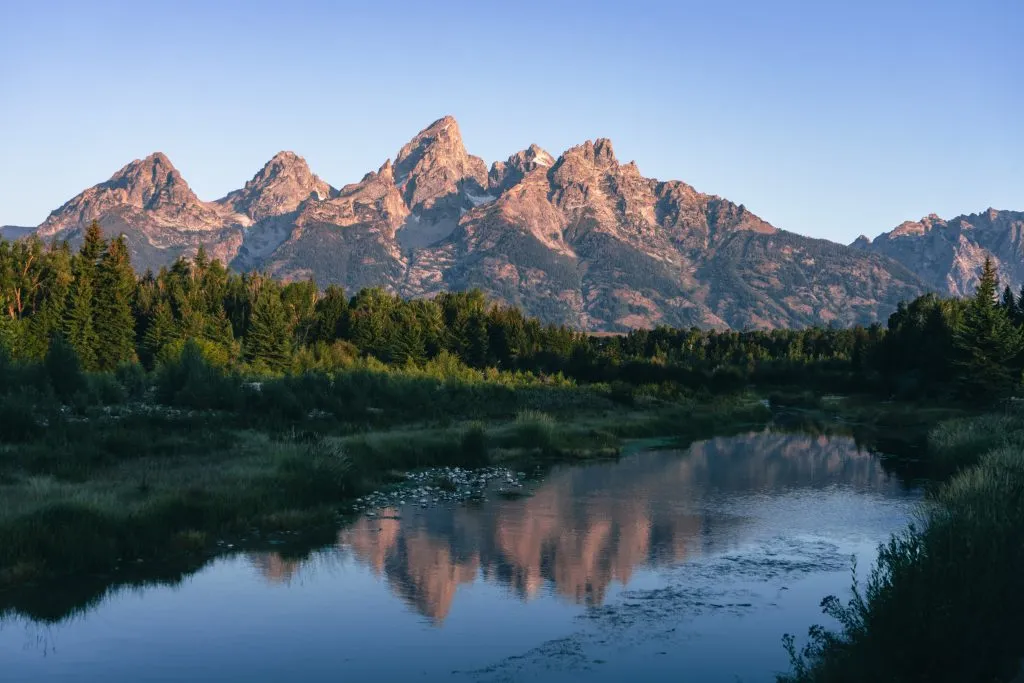
Grand Teton National Park sits just south of Yellowstone, connected by the John D. Rockefeller Jr. Memorial Parkway, and many travelers add a day or two. The jagged Teton Range rises straight up from the valley floor with no foothills in front, which makes it one of the most dramatic mountain views in the country. Stop at Oxbow Bend for reflections of Mount Moran, take the boat across Jenny Lake for the hike to Hidden Falls and Inspiration Point, and photograph the historic barns on Mormon Row with the mountains behind them. The town of Jackson makes a convenient base, with restaurants and its famous elk antler arches on the town square.
What to pack
Weather in Yellowstone changes fast, and summer mornings can be near freezing. Bring layers, a rain jacket, a warm hat and sturdy walking shoes. Pack binoculars for wildlife, a refillable water bottle, snacks for long drives and a physical map for areas without cell service. Fill up the tank whenever you can, since gas stations are spread out.
Safety and etiquette
- Stay on boardwalks in thermal areas. The ground is thin and the water can cause severe burns.
- Keep at least 100 yards from bears and wolves and 25 yards from other wildlife.
- Carry bear spray on trails and know how to use it.
- Cell service is limited in much of the park, so download maps before you go.
Planning it in Wander Off
Create a Yellowstone adventure and add each stop to the Plan tab by day, from Old Faithful on Day 1 to Lamar Valley on Day 3. Invite your family or friends so everyone can vote on the hikes and stops. Book flights, lodges and tours in the Tickets tab, or ask the AI Travel Concierge to find lodging near the park entrances. Every photo of a geyser or bison lands on the right day and place automatically. If you are traveling with kids, our family vacation planner guide has more ideas, and our Grand Canyon South Rim itinerary makes a great second park.